ENGINEERING METHOD
Design pressure/temperature cases, thickness, stability, reinforcement, supports, fatigue where required, wind/seismic and nozzle loads are evaluated with traceable calculations.

Develops code-compliant vessels, columns, reactors, exchangers and tanks for all operating, upset, transport and site-load cases.
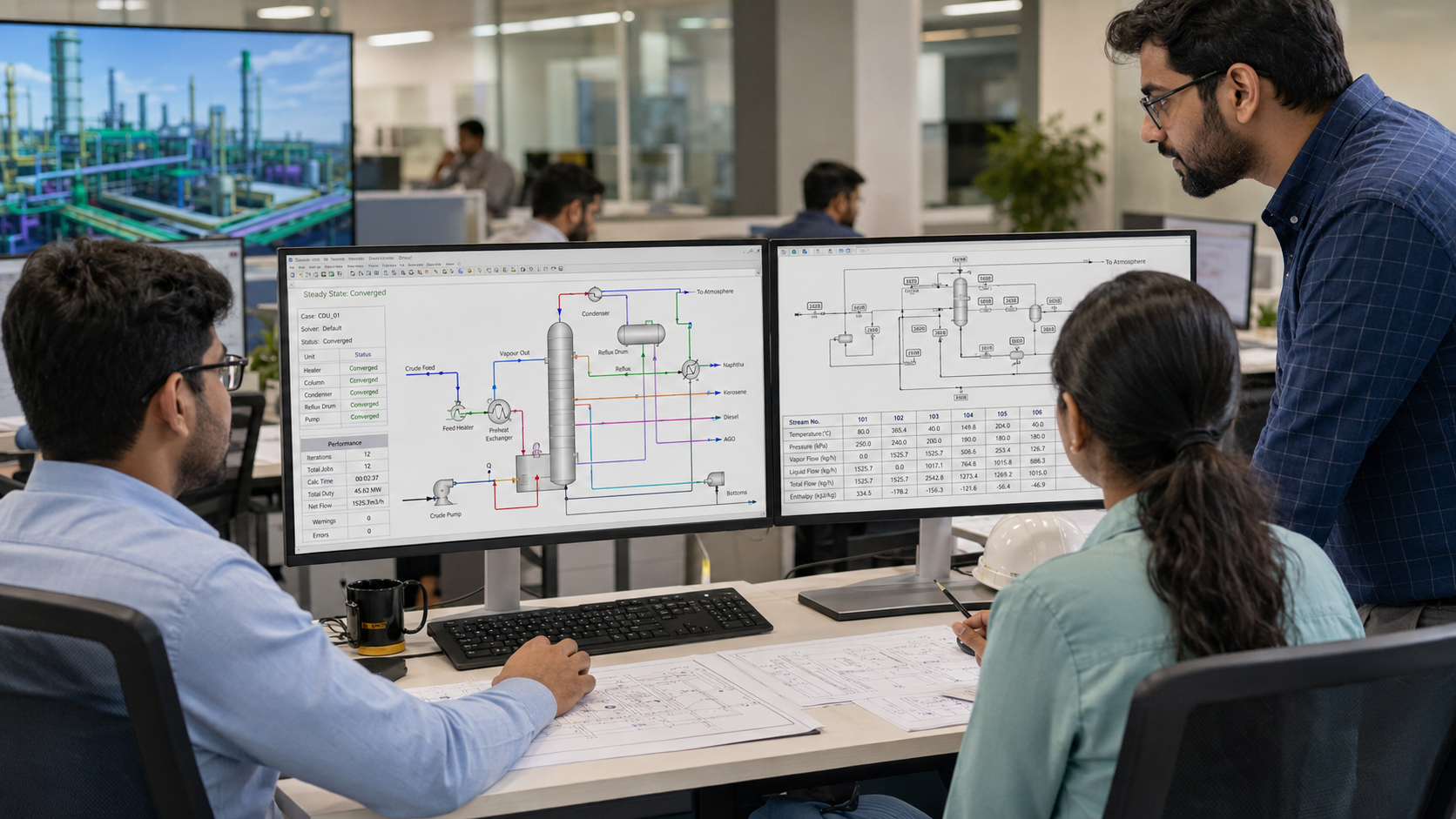
Design pressure/temperature cases, thickness, stability, reinforcement, supports, fatigue where required, wind/seismic and nozzle loads are evaluated with traceable calculations.
Typical tool classes include PV Elite or equivalent ASME/EN/GOST pressure-equipment calculation software, exchanger mechanical tools and verified engineering spreadsheets.
Equipment datasheet, metallurgy/corrosion basis, loads, site data, nozzle schedule, internals/supports and fabrication/transport constraints.
Mechanical calculation, GA and fabrication drawings, nozzle/support details, lifting/transport studies, ITP, weld/NDE map and manufacturing data-book requirements.
Independent calculation check, code-case review, drawing/calculation consistency, material traceability and fabrication hold points.
Columns, pressure vessels, reactors, heat exchangers, LPG equipment and tanks.
ASME VIII/API 650/620 or EN 13445/14015/DIN and applicable GOST code selected contractually. Software is selected per project scope, client requirement, interoperability and licensed availability; naming a tool class does not imply that every project uses every product.
ASME VIII/API 650/620 or EN 13445/14015/DIN and applicable GOST code selected contractually. Software is selected per project scope, client requirement, interoperability and licensed availability; naming a tool class does not imply that every project uses every product.